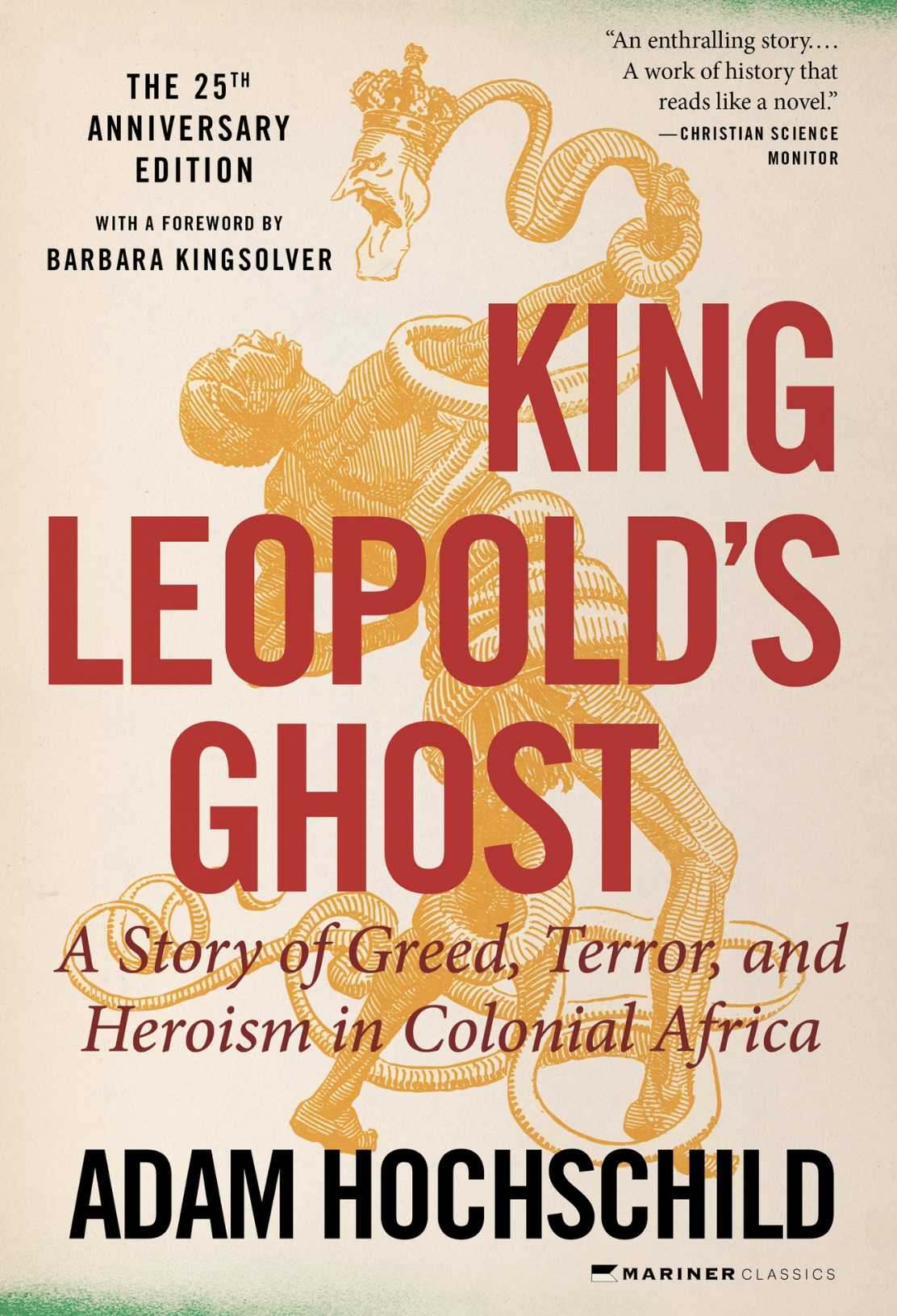

Adam Hochschild’s King Leopold’s Ghost is a devastating account of Belgian King Leopold II’s conquest and exploitation of the Congo. Under the language of civilization and humanitarian progress, Leopold created a system of forced labor designed to extract ivory and rubber at almost unimaginable human cost. Congolese communities endured hostage-taking, starvation, whippings, mutilation, and mass killing, while European officials reduced human beings to units of production.
Hochschild’s great achievement is to show that these atrocities were not accidental excesses but the intended results of a colonial system built on racism, terror, and greed. He also honors the some missionaries, journalists, activists, and Congolese witnesses who exposed the regime’s crimes to the world.
Although the book concentrates primarily on Leopold’s personal rule of the Congo from 1885 to 1908, its story illuminates the brutality that continued under formal Belgian colonial government. Belgium extracted the country’s wealth while denying its people meaningful political power and leaving them woefully unprepared for independence in 1960.
When Patrice Lumumba emerged as the newly independent Congo’s forceful nationalist prime minister, Belgium and the United States viewed him as a threat to Western interests. Belgium played a direct role in the events leading to his murder by Katangan forces in January 1961, while the CIA worked to remove him and separately developed plans to assassinate him, though its own assassination scheme was not the method ultimately used. (U.S. State Department historical records).
Read in this broader context, King Leopold’s Ghost is more than a history of one monstrous king. It reveals a pattern in which foreign powers claimed the Congo’s land and resources, destroyed or undermined Congolese self-determination, and then concealed violence behind respectable political language. The road from Leopold’s rubber regime to Lumumba’s assassination was not perfectly straight, but both episodes reflected the same willingness to treat Congolese lives as expendable whenever they conflicted with Western wealth or power. Hochschild’s compelling and morally urgent book forces readers to confront colonialism not as a misguided civilizing project, but as an organized system of theft and dehumanization whose consequences survived long after Leopold’s death.
A horrible book that everyone with an interest in Africa must read. I can’t believe less that two decades after the assassination of Lumumba, I spent time in the Congo (Kinshasa) and never heard of the tragedy of Leopold II’s reign–even though he never stepped foot in the Congo.



Thanks for leaving a reply