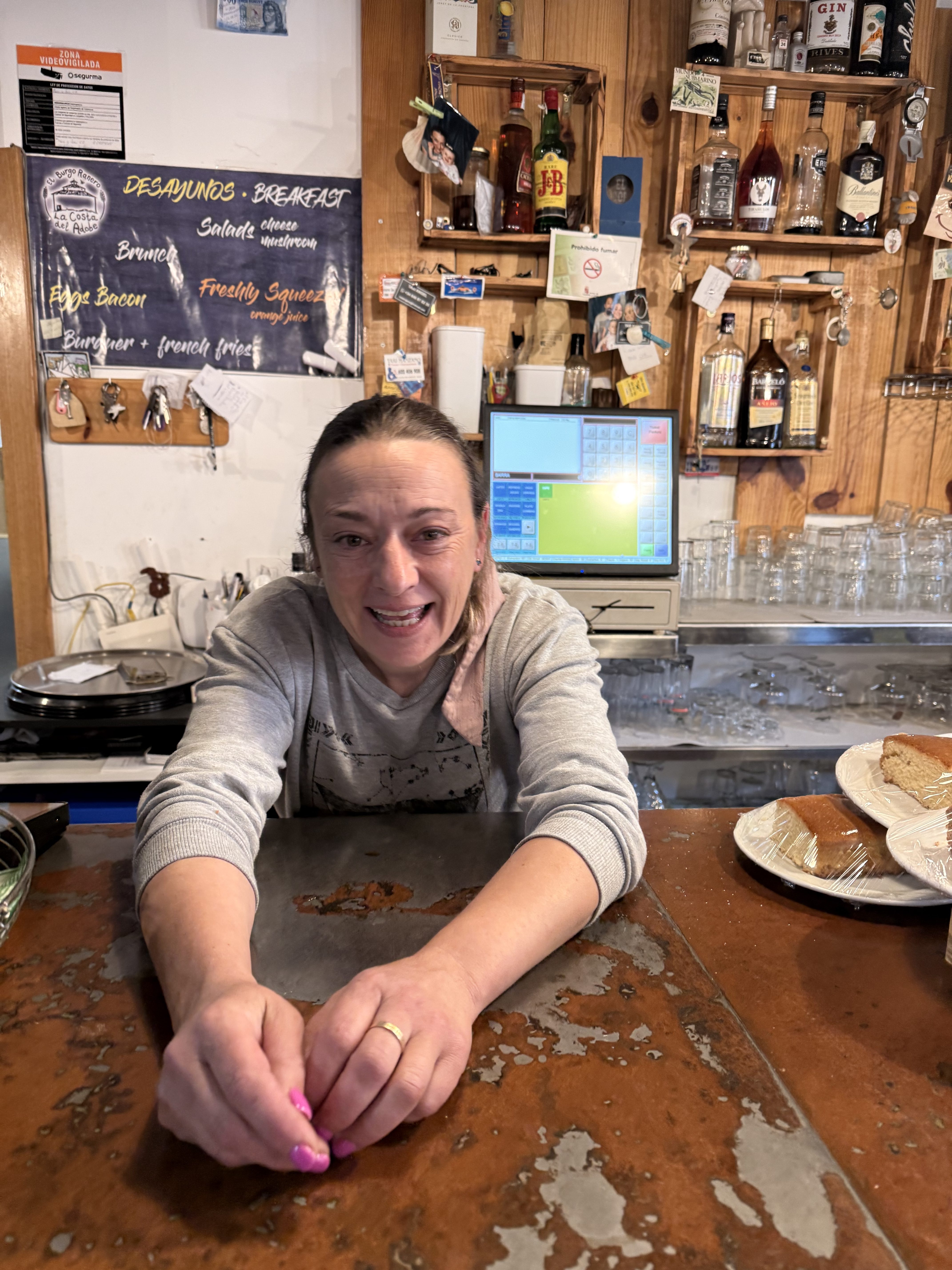
I met some delightful people in El Burgo Ranero. Great breakfast at El Costa delAdobe. Sat for a long time talking with Stephan, a former international pilot with American Airlines and living in Shelby North Carolina. We told each other stories from our travels in China, India, and the continent of Africa.


Mansilla de las Mulas is renowned for its well-preserved 12th-century medieval walls, considered the best in the province. Key structures include the stone city walls (up to 14 meters high), the Santa Maria Gate, the 13th-century San Martín Church, and the medieval bridge over the Esla River.
Medieval Walls (Murallas): Built during the reign of Fernando II in the 12th century, these limestone walls span much of the town and feature battlements and fortified, cube-shaped towers.


Conception Gate (Arco de la Concepción): Known also as the Santa Maria gate, this is the best-preserved entrance to the walled town, featuring a distinctive pointed ashlar arch.

Church of San Martín: A 13th-century building constructed in the Mudéjar style. It was later modified in the 16th and 17th centuries and now serves as a House of Culture. Thanks to Wikipedia for the following: “Mudéjar style is a unique 12th-to-17th-century Spanish artistic movement blending Islamic decorative traditions with Christian European (Romanesque, Gothic, Renaissance) architecture. Created largely by Muslim craftsmen (Mudéjars) for Christian patrons, it is defined by intricate brickwork, glazed ceramic tiles (azulejos), complex geometric plasterwork (yesería), and ornate wooden ceilings.”

Medieval Bridge (Puente Medieval): A crucial historic crossing over the Esla River used by pilgrims on the French Way.

Convent of San Agustín Ruins: While largely destroyed, the remains, including the Villafañe Chapel and a façade with decorative friezes, date to the early 16th century. The site now houses the Ethnographic Museum of the Leonese Peoples.

It’s sad that the Camino is the only thing keeping this little village alive. Much of it is run down.
ADDENDUM
First Light
When I left after breakfast a priest was handing out a poem in the reader’s language. It was long, but here’s one verse:
Pilgrim, whose voice is calling you?
What hidden force leads you on?
The force that draws me to it
Only the one above can know.
Morning Mojo/What Not to Miss, Memorialize
These will appear in the journal above.
High Point of the Day
My long conversation with Stephan. I found if a Camino conversation lasts over fifteen minutes, it gets deep fast. Everyone is looking for something.
I am out with lanterns, looking for myself.
—Emily Dickinson, a letter to a friend
Examination of Conscience:
It’s hard to tell yourself to stop being concerned about yourself, or your schedule, and take the opportunities for listening to others.
Guided Prayer/Thought:
”Lord, help me listen.”


Thanks for leaving a reply