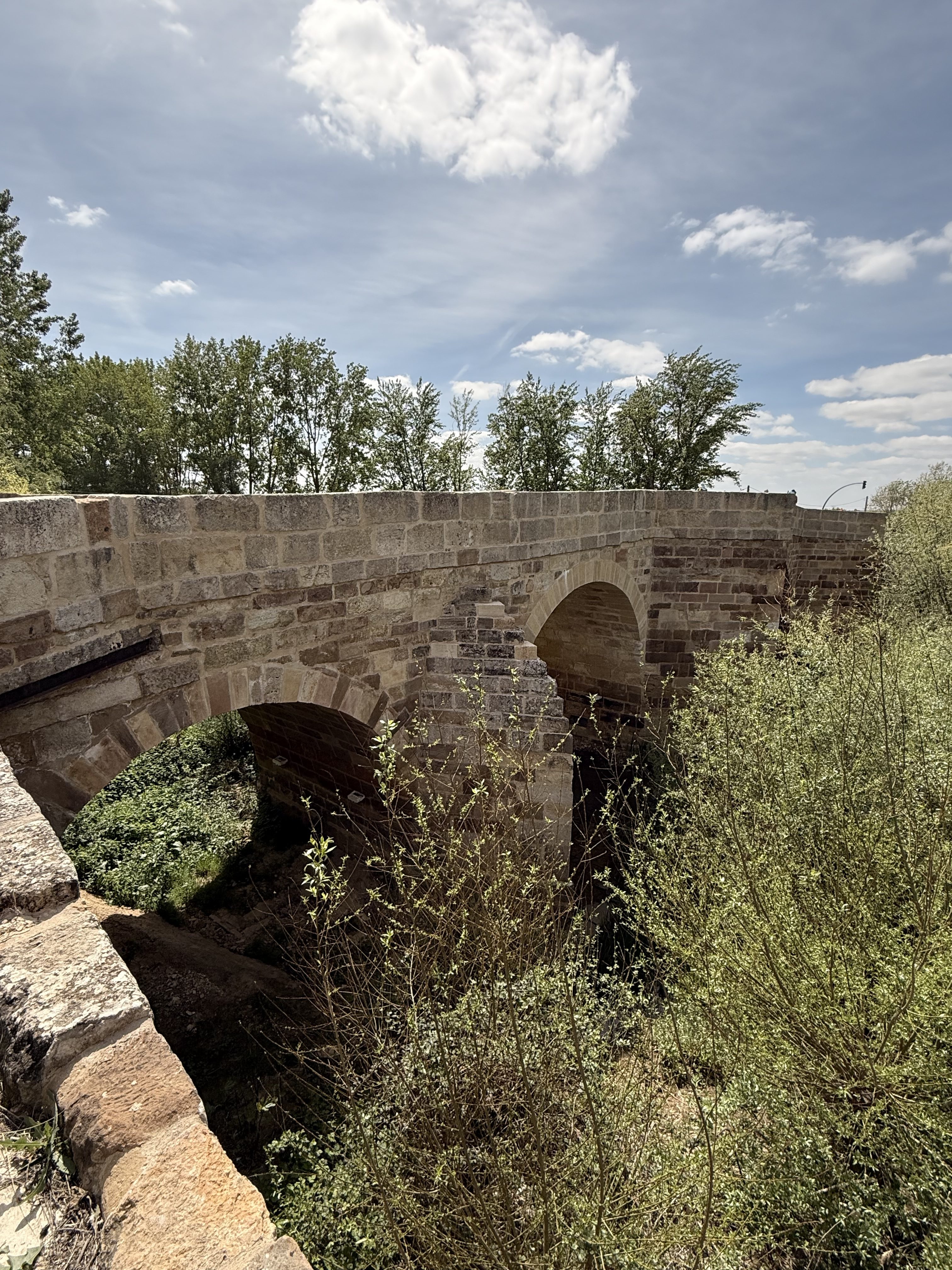
Sahagún, Spain, is a critical medieval town on the Camino de Santiago known as a capital of “poor Romanesque” or Mudéjar architecture, characterized by 12th-13th century brickwork. Key site is the Puente Canto bridge.


Puente Canto (1085): A medieval bridge over the Cea River, commissioned by Alfonso VI, constructed with stone to facilitate pilgrimages.
Monastery of San Benito el Real (Ruins): Once a powerful Cluniac abbey, now reduced to ruins, featuring the Clock Tower (San Mancio) and the 16th-century Arch of San Benito, which mark the site of its former grandeur.
And that’s another stork and nest on top of the ruins.

The 16th-century Arch of San
ADDENDUM
First Light
“And yet something else happened, and it became one of those moments that he would walk into and realize, even as it was happening, that it was significant. If he kept looking at the things that were bigger than himself, he knew he would make it. Again he felt in a profound way that he was both inside and outside what he saw; that he was both connected, and passing through. Harold began to understand that this was also the truth about his walk. He was both a part of things, and not.” (from The Unlikely Pilgrimage of Harold Fry: A Novel by Rachel Joyce)
Morning Mojo/What Not to Miss, Memorialize
These will appear in the journal above.
High Point of the Day
I am a sucker for the old bridges. Bridges were the first step in developing the Camino infrastructure. Too many people were dying from crossing the rivers.
Examination of Conscience:
Who am I to complain about how tired I am. I cannot imagine what pilgrims went through 600 or 700 years ago.
Guided Prayer/Thought:
”Lord give me strength.”


Thanks for leaving a reply