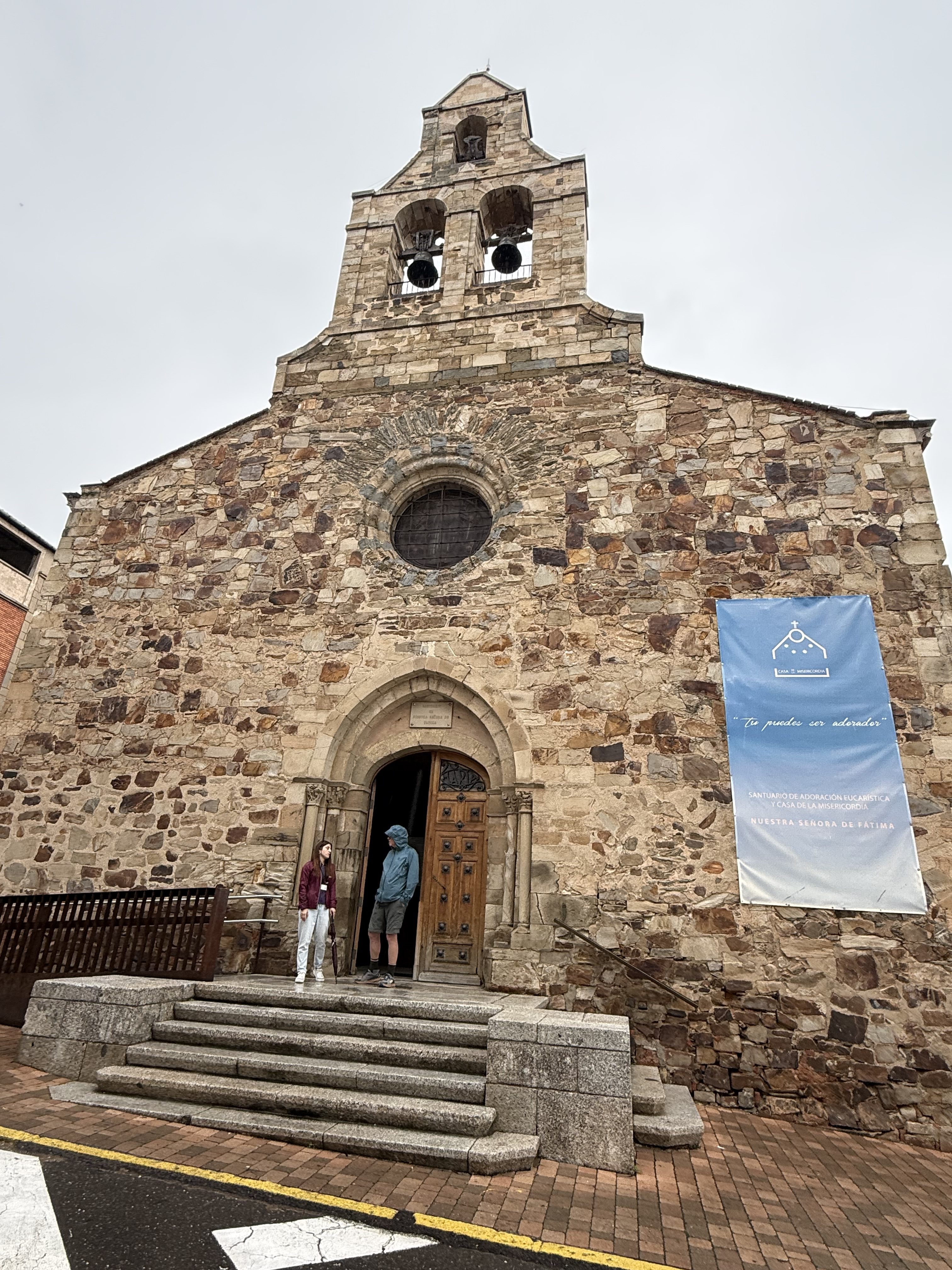
The nature of the Camino does not leave much time to dig deeper into the historical aspects of the pilgrimage, but besides getting from place to place, I am interested in knowing the infrastructure developed in the 10th, 11th, and 12th century. Who built it? Who funded it? And other details of the early days. So, I apologize is some of this souls like a tour guide.
Astorga, Spain, features a rich blend of medieval and earlier structures, primarily defined by its Roman walls (3rd-4th century AD, heavily used in the Middle Ages), Walls of Astorga (Murallas de Astorga):

Although originating in the late 3rd century AD, these walls were vital in the Middle Ages, with numerous additions and repairs throughout the medieval period. They enclose the historic center and are visible from several locations.

Astorga Cathedral (Catedral de Santa María de Astorga): Located on the site of an earlier Romanesque church, construction of the current, largely Gothic cathedral began in 1471, featuring Renaissance and Baroque additions.

Plaza Mayor & Town Hall: The city square features a Town Hall with two towers, representing the civic center during the city’s later development.

Iglesia de San Francisco: Another religious structure was crucial during the Middle Ages as a stop on the Camino de Santiago pilgrimage route.

Thanks for leaving a reply