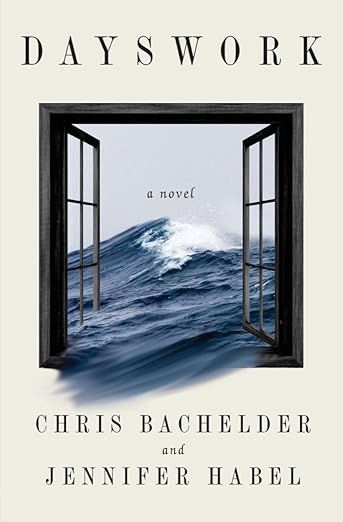
My favorite in 2026 so far!
Dayswork presents itself as a “novel,” but it’s really a hybrid: part pandemic-day diary, part marriage portrait, part research notebook, part literary criticism, and part biographical collage focused on Herman Melville. It’s a sharp, funny critique of literary sainthood. By juxtaposing Melville-myth with domestic detail and scholarly apologetics, the book keeps asking who gets protected by the legend of Great Art—and who gets minimized.
As Melville’s artistic drive and domestic costs come into focus, the narrator’s own home life does too. The research becomes a way to ask: What does devotion to art cost? Who pays? What counts as “work” inside a marriage? And what does it mean to build a life around someone else’s “greatness”—whether that someone is a canonical author, or a spouse with needs, habits, and claims on your time?
Dayswork is one of those books that argues—quietly but insistently—that thinking is an action and attention is labor. It turns “research” into a moral and marital practice: to study someone’s life is to confront how stories get made, defended, and paid for.
A few quotes:
“Melville teaches the writer who would write about him, that fate isn’t something that happens to us. Rather, we are fate. We are destiny.”
“[H]e never sat still in one seat for long, but moved about trying every place of vantage.”
“This morning I discovered a list… of the ten writers most likely to put you to sleep.”
“Moby Dick is a long book… It practically drives other books out of the way.”
“And Melville’s daughter never forgave him.”
“My husband doesn’t ask for much. He requires a lot, but he doesn’t ask for much.”



Thanks for leaving a reply